
How to deal with heat waves and hot weather in New Jersey
The average temperature in New Jersey is rising faster than most of the U.S. Here is what residents should know about heat waves and dealing with hot weather.
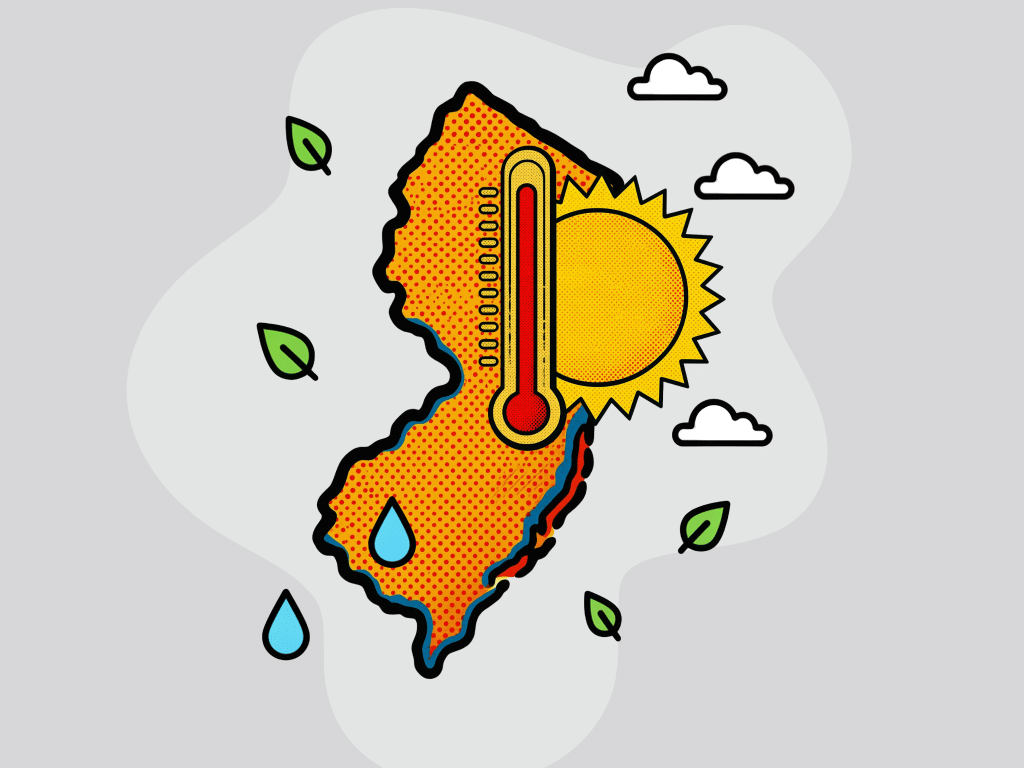
New Jersey is warming faster than nearly all other states, leading to more heat-related illness, event cancellations, and electrical grid failures.
The Jersey Bee created this resource to help New Jersey residents understand the causes of extreme heat and ways they can reduce the impact of hot weather on themselves and their communities.
In this resource:
- What is extreme heat and how does it affect New Jersey?
- What causes extreme heat and heat waves in New Jersey?
- Who is vulnerable to extreme heat?
- How do I stay cool without air conditioning?
- How do I protect myself against extreme heat?
- What are symptoms of heat stroke?
What is extreme heat and how does it affect New Jersey?
Conditions for extreme heat vary by location. It occurs when summertime temperatures are much higher and humid than average.
Average summertime temperatures compounded with high humidity are also considered extreme, according to New Jersey State Climatologist David Robinson. High moisture levels in the air make it difficult to stay cool because sweat cannot evaporate from the skin as easily.
The National Weather Service issues warnings for extreme heat by using a heat index, a “real feel” measure of temperature based on humidity and actual air temperature. Heat warnings are issued when the heat index nears 105°F during July and August.
LEARN MORE: Calculate the heat index using the National Weather Service’s online tool.
The most common example of extreme heat is a heat wave, a period of high temperatures and humidity that lasts for at least two consecutive days.
In New Jersey, heat waves are predicted to quadruple from once per year to four times per year by 2050, according to a 2020 study by the state Department of Environmental Protection.
National temperature increases are more concentrated in New Jersey than most other states because its dense development traps heat and its coastal areas are warmed by the Atlantic Ocean, which is increasing in sea surface temperatures.
The NJDEP study found that extreme heat is projected to alter state rainfall patterns because the Earth’s atmosphere can hold more water vapor as temperatures increase. That can lead to intense storms, less snow during the winter, periods of drought during the summer, and poor air quality.
What causes extreme heat and heat waves in New Jersey?
The Earth is naturally kept warm by energy from the Sun. That energy reaches the Earth and gets trapped by the planet’s atmosphere, which is made up of gases like carbon dioxide or methane. This is called the greenhouse effect.
Carbon dioxide and methane are known as greenhouse gases because they trap heat, blanketing the Earth and keeping it warm enough for humans and other life.
New Jersey experiences more frequent heat waves and other extreme weather because greenhouse gas levels are higher now than at any other time in human history, causing the Earth to trap more of the Sun’s heat and get warmer. This is almost entirely a result of industries that burn fuels and release these gases, like transportation, electricity generation, agriculture, and manufacturing.
These human activities contribute to global warming, altering weather patterns, changing ocean chemistry, and melting polar ice, and, as a result, raises sea levels. Scientists describe these and other environmental impacts of global warming as climate change.
In New Jersey, buildings, roads, and other infrastructure absorb and radiate more heat than natural landscapes like forests, wetlands, or grass-covered areas, creating a concentration of heat known as a heat island in and around urban areas.
In New Jersey’s largest city, Newark, most residents experience weather that’s 9°F or higher than neighboring suburban communities like Maplewood and Livingston.
New Jersey’s Black, Latino, and low-wealth communities are more likely to experience the impact of extreme heat because of segregation.
READ: The Jersey Bee’s reporting exploring segregation in New Jersey and movements for repairing the harms of systemic discrimination
Who is vulnerable to extreme heat?
According to the NJDEP, some populations are more susceptible to heat-related illness when weather conditions are extreme:
- Low-income communities.
- Children.
- Seniors.
- People with chronic pre-existing health conditions.
- Outdoor workers.
- Pregnant people and people who are breastfeeding.
- Homeless populations.
- Athletes.
How do I stay cool without air conditioning?
You can visit a cooling center if you don’t have reliable access to air conditioning during hot days. Find a list from NJ 211 here.
Financial assistance is available to low-income residents in New Jersey to help cover cooling and heating costs:
- The Universal Service Fund provides a monthly credit on eligible customers’ gas and electric bills. Applications open annually and close mid-August. Find out if you’re eligible here.
- The Low Income Energy Assistance program begins accepting applications in the fall and closes in the summer. Find out if you’re eligible here.
Stay cool by joining a local pool membership, visiting a splash park, or sitting in shaded areas.
Find pools, splash parks, and more at Chill Out NJ, the state’s cooling center map.
How do I protect myself against extreme heat?
People can monitor extreme heat in their neighborhood by checking forecasts and subscribing to weather alerts.
Most smart phones issue warnings about extreme weather through Wireless Emergency Alerts. These notifications use specific terms to alert people about different heat levels and its severity. Here’s what they mean.
Heat watch
Heat watch means extreme heat will likely occur in the next 1-3 days. Stay safe by:
- Drinking water.
- Canceling or postponing outdoor activities.
- Visitng the nearest cooling center if you do not have access to air conditioning.
- Reviewing safety plans with people in your community and family.
Heat advisory
Heat advisory means the heat index is projected to be 95°F for two consecutive days or between 100°F and 104°F for any length of time. Stay safe by:
- Drinking water.
- Canceling or postponing outdoor activities.
- Being in a cool place during hottest parts of the day (10 a.m. to 4 p.m.).
- Taking frequent breaks in shaded areas.
Extreme heat warning
Extreme heat warning means the heat index exceeds 105°F for more than three hours for two consecutive days. Stay safe by:
- Drinking water.
- Being indoors where air conditioning is available.
- Avoiding outdoor activity during peak heat hours (10 a.m. to 4 p.m.).
- Checking on family and neighbors.
What are symptoms of heat stroke?
Heat stroke is a serious heat-related illness that happens when the body cannot control its temperature. Symptoms include:
- Confusion and slurred speech.
- Abnormally high body temperature.
- Seizures.
- Hot, dry skin.
- Profuse sweating.
- Loss of consciousness.
If you think someone may be experiencing heat stroke, call 911 and provide first aid by:
- Staying with the affected person.
- Moving the affected person to a shaded or cooler area.
- Removing any outer clothing that traps heat.
- Placing cold, wet cloths on the head, neck, or armpits.
- Fanning the affected person to speed cooling.
- Prepare an ice bath, if possible.
Ways to help your community keep cool
Connect with mutual aid organizations like Ironbound Community Corporation and Montclair Mutual Aid in Essex County. Mutual aid groups provide resources to people in and around their community.
Review the 2024 New Jersey Extreme Heat Resilience Action Plan. It includes information about emergency preparedness, workplace heat illness prevention, regional planning, and more.
Volunteer with New Jersey Tree Foundation, a nonprofit that works with volunteers every spring and fall to plant trees in cities like Newark and Camden. Tree canopy coverage provides shade to keep areas cool during extreme heat.
Help improve this resource
Help The Jersey Bee improve this resource by volunteering your expertise on the subject. Contact us here or email connect@jerseybee.org to share your experience.
Authors


Related Articles
Meet the Democratic candidates running in NJ-11 special election primary
Learn about the candidates running in the Feb. 5 Democratic primary for the 11th congressional district special election in New Jersey.

How New Jersey fills congressional vacancies
Here is the process for filling vacancies in the U.S. Senate and House of Representatives in New Jersey.

How to recall elected officials in New Jersey
Learn about the rules, timelines, and requirements for removing elected officials from office before their terms ends in New Jersey.
