
Segregation and Reparation

Read The Jersey Bee’s award-winning reporting to learn about segregation and solutions to inequity in the Garden State.

About our reporting
New Jersey was referred to as the “slave state of the North” and home to more than two-thirds of all of the enslaved people in the Northern United States by the 1830s. While slavery was abolished in the United States in 1865, the legacy of slavery and unequal treatment continues in New Jersey’s housing, education, healthcare, and other systems today.

This reporting was produced to help local residents understand the history of segregation and impact of systemic racism on life in Essex County. In 2025, it was recognized with an Excellence in New Jersey Local News Award from the Center for Cooperative Media and NJ News Commons.

A gold, circular badge with a jagged edge features the silhouette of New Jersey in the center. Overlapping the silhouette, bold black text reads: "2025 NJ News Commons Excellence in Local News Awards."


HISTORY OF SEGREGATION
A segregation and reparation forum panelist in Maplewood centered in the image holding a microphone while sitting down. Two panelists are sitting and facing the person speaking.
Community conversations center segregation and reparations in Essex County suburbs
Attendees at events in Maplewood and Montclair discussed the impact of redlining, systemic discrimination, and reparations at forums hosted by The Jersey Bee.
A collage of images shows historical examples of segregation. Bottom left, a vintage photograph shows a approximately two dozen people dressed as the Klu Klux Klan march through a park in Essex County carrying a banner. Top left, a newspaper headline reads "Fiery cross in yard protests wedding" and goes on to say "Montclair man about to marry white girl reveals he has colored blood." On the right, a historic map of Essex County shows redlined neighborhoods, predominantly in the eastern half of Essex County.
In Essex County, New Jersey’s history of segregation persists
The Jersey Bee is launching a project with Next City to explore segregation in Essex County and New Jersey. Here is what we know about the former “slave state of the North” and what you can do to help us report.
ABOUT REPARATIONS
Four people sit in chairs on a stage in discussion below a screen that reads "The Promise of Juneteenth: New Jersey Reparations Council Year One" with the raised fists of people of color pictured.
Advocates will propose a reparations plan for New Jersey. Here is what residents should know
In 2025, a committee of advocates will propose how New Jersey can implement reparations for Black people. Here is what we know so far.
ALL REPORTING
Gráfico de estilo collage que presenta recortes hexagonales de seis personas, cada una en una foto profesional, dispuestas en el centro de la imagen. El fondo muestra la cúpula del Capitolio del Estado de Nueva Jersey, parcialmente descolorida. Hay formas hexagonales en blanco esparcidas a la izquierda, lo que sugiere lugares reservados. Los individuos son cinco hombres y una mujer.
Los candidatos a la gobernación de Nueva Jersey en 2025 responden preguntas sobre segregación y equidad
The Jersey Bee preguntó a 12 candidatos a la gobernación de Nueva Jersey cuáles eran sus planes para un estado más justo y equitativo. Seis respondieron. Esto es lo que contestaron.
This is a digitally stylized painting of six women, several holding infants, in a warmly lit indoor space. The women are dressed in colorful clothing, and their facial expressions convey care and connection. A circular sign in the background references maternal health.
‘Everybody needs a village’: In New Jersey, a community of health providers redesign care for Black mothers
Black women are nearly seven times more likely to die than white women from a pregnancy-related death in New Jersey. A number of promising programs – designed by and for Black women – could change that.
Gráfico de estilo collage que presenta recortes hexagonales de seis personas, cada una en una foto profesional, dispuestas en el centro de la imagen. El fondo muestra la cúpula del Capitolio del Estado de Nueva Jersey, parcialmente descolorida. Hay formas hexagonales en blanco esparcidas a la izquierda, lo que sugiere lugares reservados. Los individuos son cinco hombres y una mujer.
N.J. 2025 governor candidates answer questions on segregation and equity
The Jersey Bee asked 12 candidates for governor in New Jersey their plans for a more just and equitable state. Six responded. Here’s what they said.
An aerial photo of a neighborhood in Newark, New Jersey with a road in running down the middle and multi-family houses on either side. There is a church at the end of the street centered in the photo.
New N.J. affordable housing guidelines call for 3,700 more affordable homes in Essex County by 2035
New housing law could bring more than 84,000 new affordable housing units across New Jersey by 2035, with half reserved for low-income families.
A segregation and reparation forum panelist in Maplewood centered in the image holding a microphone while sitting down. Two panelists are sitting and facing the person speaking.
Community conversations center segregation and reparations in Essex County suburbs
Attendees at events in Maplewood and Montclair discussed the impact of redlining, systemic discrimination, and reparations at forums hosted by The Jersey Bee.
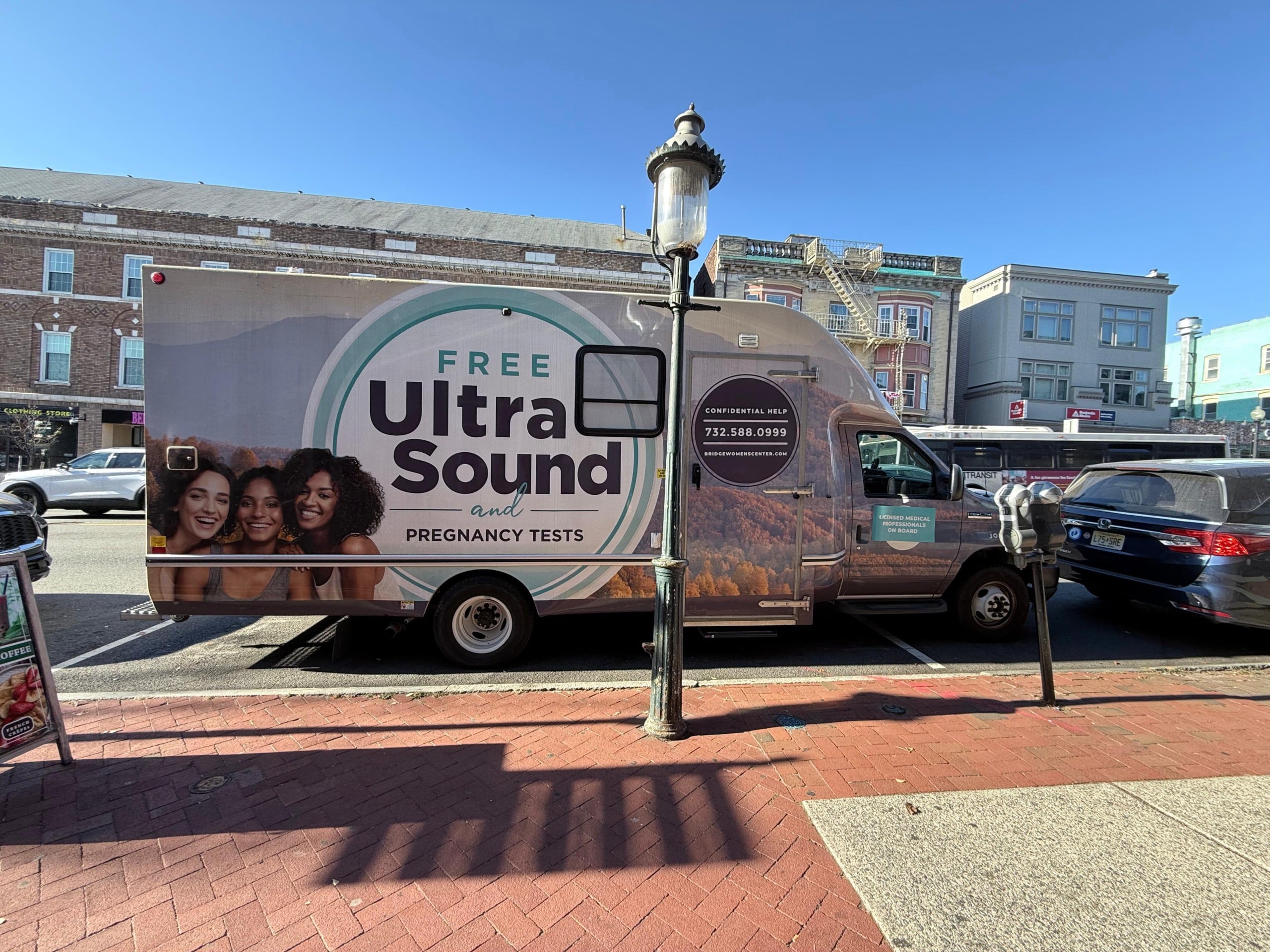
Una camioneta está estacionada en una calle frente a unas tiendas y muestra un gran anuncio que ofrece ecografías y pruebas de embarazo gratuitas. En el costado del vehículo se ven tres mujeres sonrientes junto a un texto en negrita que dice "Ecografías y pruebas de embarazo gratuitas". Otro texto ofrece "Ayuda confidencial" y un número de teléfono (732-588-0999) y un sitio web (bridgetowomenscenter.com), lo que sugiere un servicio relacionado con el embarazo y la salud de la mujer. El área circundante incluye una farola, un parquímetro y vehículos cercanos con un fondo de escaparates y edificios urbanos.
Centros antiaborto aparentan ser clínicas de salud y se enfocan en quienes buscan atención de aborto en New Jersey
Hay casi el doble de centros antiaborto que la cantidad de clínicas de aborto en Nueva Jersey. Con frecuencia respaldados por grupos religiosos, se asemejan a las clínicas de salud y se enfocan en personas de bajos ingresos, inmigrantes y comunidades de color.
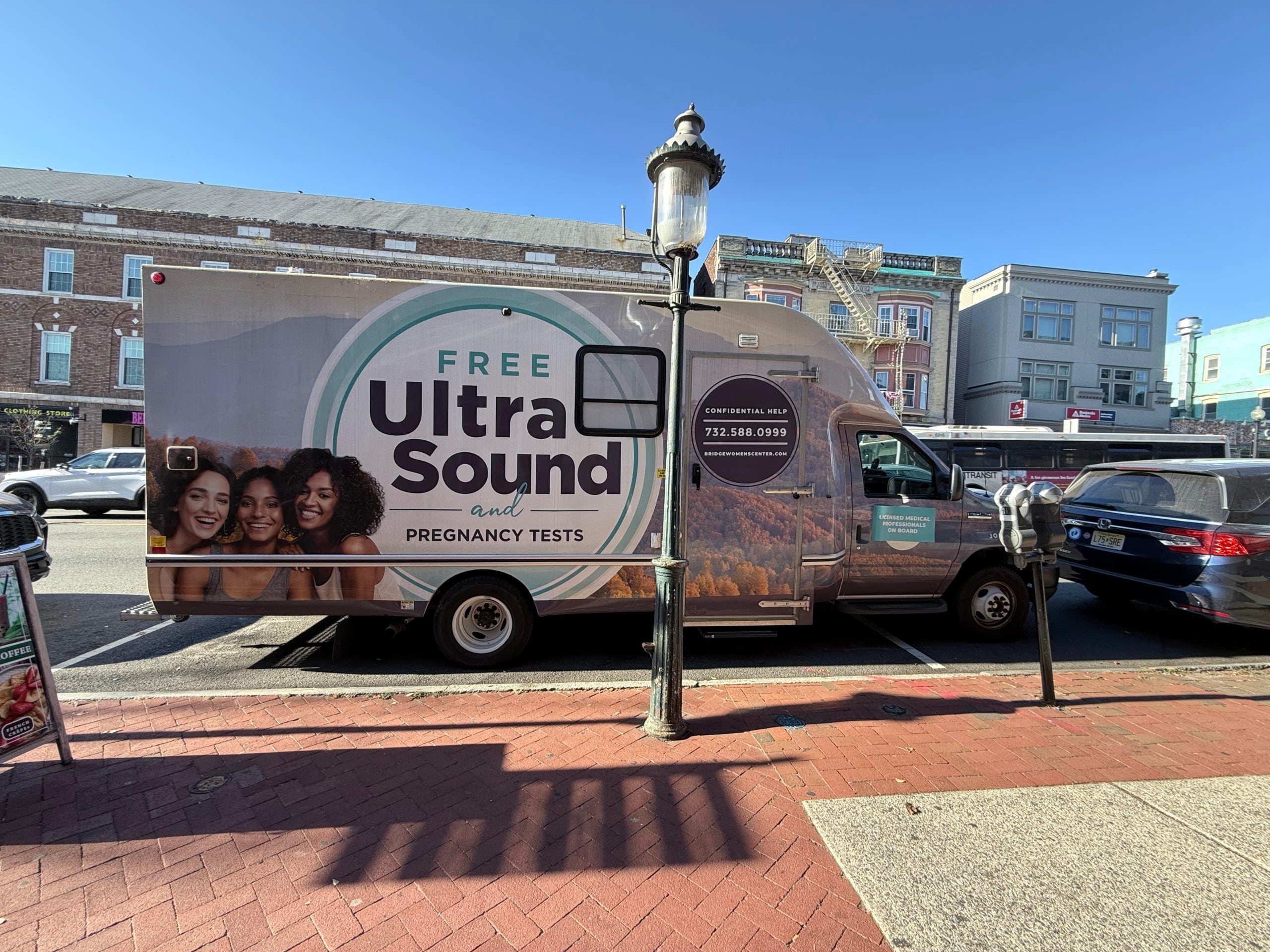
A van is parked along a street in front of shops, displaying a large advertisement for free ultrasound and pregnancy tests. The side of the vehicle shows three smiling women alongside bold text reading, "Free Ultrasound and Pregnancy Tests." Additional text offers "Confidential Help" and a phone number (732-588-0999) and website (bridgetowomenscenter.com), suggesting a service related to pregnancy and women’s health. The surrounding area includes a lamp post, a parking meter, and nearby vehicles against a backdrop of storefronts and urban buildings.
Anti-abortion centers take on appearance of health clinics, target people seeking abortion care in New Jersey
There are almost twice as many anti-abortion centers as actual abortion clinics in New Jersey. Often backed by religious ministries, they resemble health clinics and target low-income people, immigrants, and communities of color.
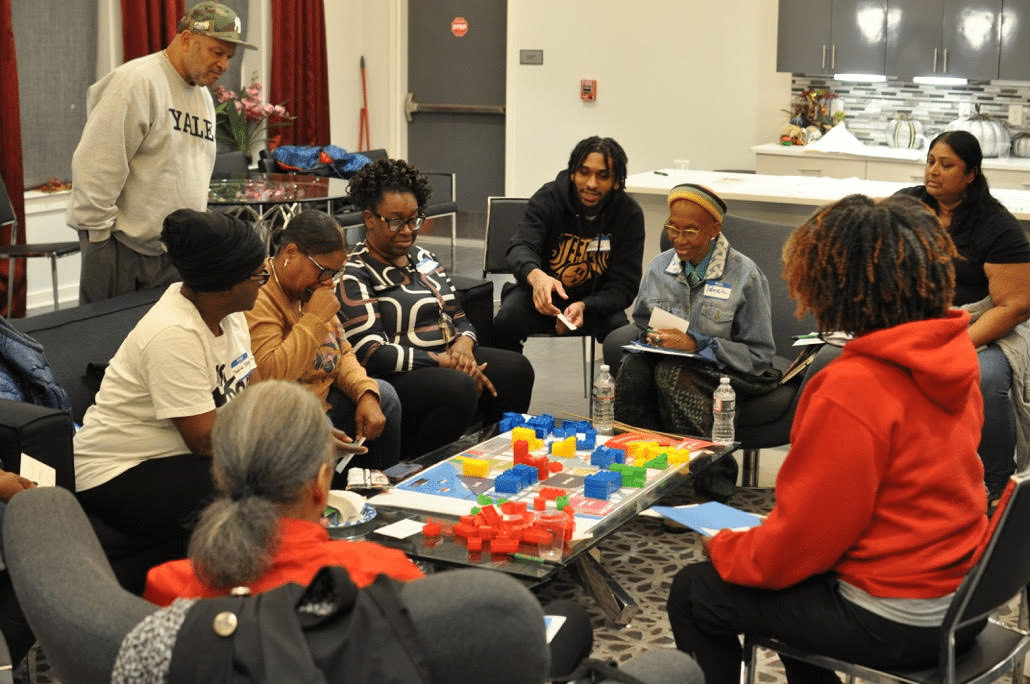
A group of people sit and stand around coffee table where a map is laid flat and topped with blocks of different colors and heights.
Newark residents build power to shape city’s redevelopment
Newark groups launch “development watch” to inform residents of property development in their neighborhoods and train them to help shape zoning and land use decisions.
An aerial photo of a neighborhood with six-lane road on the right sides with multi-family houses and apartment buildings on the left with trees, roads, and other greenery between them. A hill covered in green trees is in the background.
El 25% de los inquilinos en NJ no pueden pagar el alquiler de su vivienda. ¿Qué pasará cuando entren en vigor las nuevas normas sobre vivienda asequible?
Durante la conferencia del gobernador sobre vivienda de 2024, los responsables de crear las normas y políticas debatieron sobre la expansión en la creación de viviendas multifamiliares y la construcción sostenible, pero prestaron poca atención a la búsqueda de soluciones al problema de segregación.
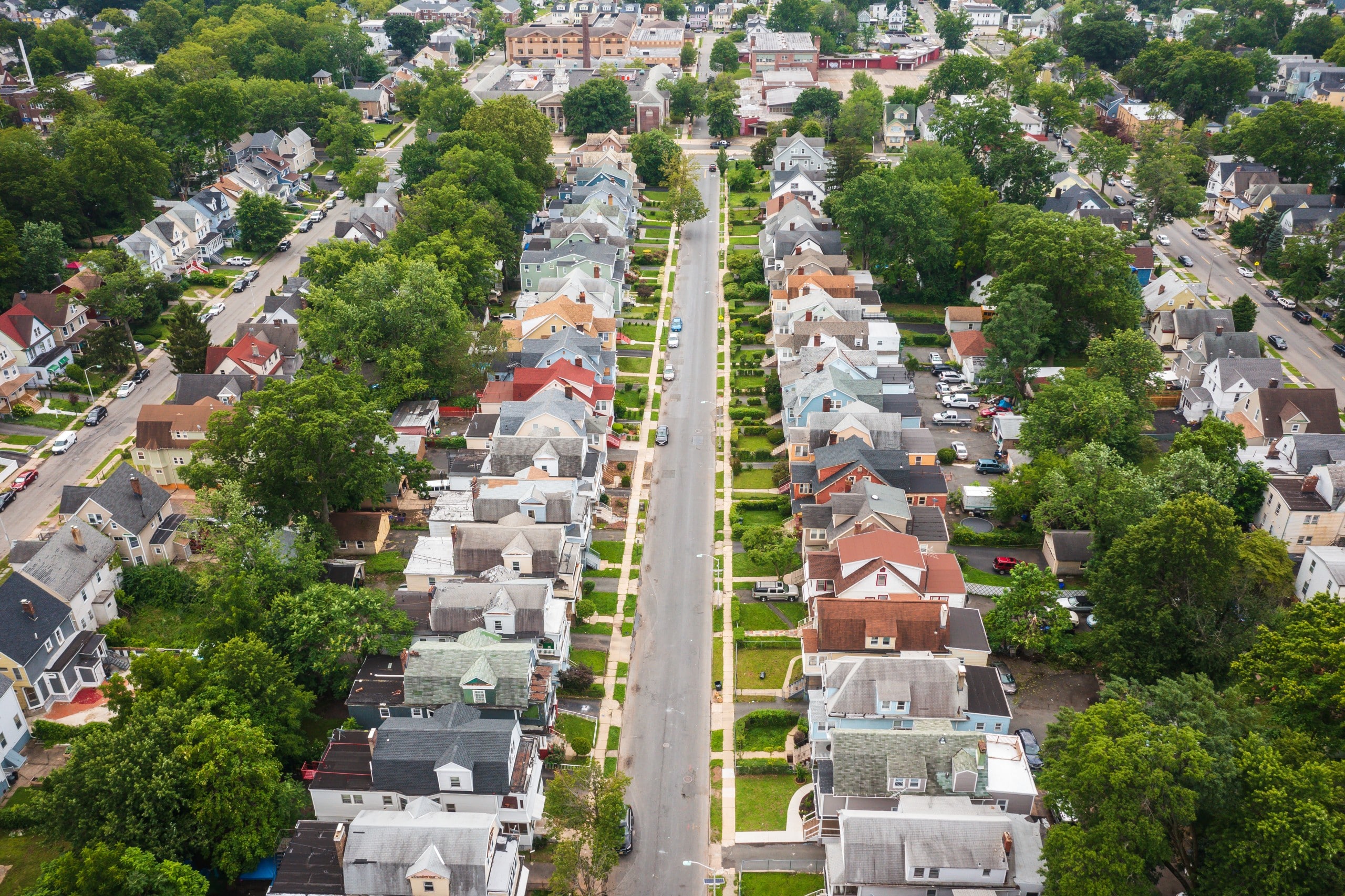
An aerial photo of a neighborhood with a road in running down the middle and multi-family houses on either side, followed by parallel streets and houses on the left and right. There is a school at the end of the street centered in the photo.
25% of N.J. renters can’t afford housing. What’s next as new affordable housing rules take effect?

Policymakers discussed expanding multi-family housing and building sustainably at the 2024 governor’s conference on housing but paid little attention to remedying segregation.
La mayoría de los inmigrantes latinos dijeron que no sabían que el aborto era legal en NJ. Conoce el grupo que ayuda al estado a entender por qué

Un modelo de salud comunitaria muestra potencial para ampliar el acceso a la atención de salud reproductiva para los inmigrantes latinos del estado.
Most Latinx immigrants said they didn’t know abortion was legal in New Jersey. Meet the group helping the state understand why
A community health model shows potential for expanding reproductive health care access for the state’s Latinx immigrants.
Four people sit in chairs on a stage in discussion below a screen that reads "The Promise of Juneteenth: New Jersey Reparations Council Year One" with the raised fists of people of color pictured.
Advocates will propose a reparations plan for New Jersey. Here is what residents should know
In 2025, a committee of advocates will propose how New Jersey can implement reparations for Black people. Here is what we know so far.
A woman holds a milkweed plant in a garden.
Urban farms are a lifeline for food-insecure residents. Will New Jersey finally make them permanent?
Urban farms in Essex County, New Jersey are calling on municipal and state governments for long-term investment to combat food insecurity.
En el condado de Essex, persiste la historia de segregación de Nueva Jersey
The Jersey Bee ha iniciado un proyecto con Next City para explorar la segregación en el condado de Essex y en Nueva Jersey. Esto es lo que sabemos sobre el antiguo “estado esclavista del Norte” y lo que puedes hacer para ayudarnos a reportar sobre este tema.
A collage of images shows historical examples of segregation. Bottom left, a vintage photograph shows a approximately two dozen people dressed as the Klu Klux Klan march through a park in Essex County carrying a banner. Top left, a newspaper headline reads "Fiery cross in yard protests wedding" and goes on to say "Montclair man about to marry white girl reveals he has colored blood." On the right, a historic map of Essex County shows redlined neighborhoods, predominantly in the eastern half of Essex County.
In Essex County, New Jersey’s history of segregation persists
The Jersey Bee is launching a project with Next City to explore segregation in Essex County and New Jersey. Here is what we know about the former “slave state of the North” and what you can do to help us report.

Celebrate NYE Eve with The Jersey Bee at Varitage Brew Works

Close the CTA

Become a member to RSVP for Dec. 30 in Bloomfield

Subscribe to The Daily Buzz to win $25 to a

local cafe. Weekly giveaways Jul. 18 to Aug. 8.