
How to recall elected officials in New Jersey
Learn about the rules, timelines, and requirements for removing elected officials from office before their terms ends in New Jersey.
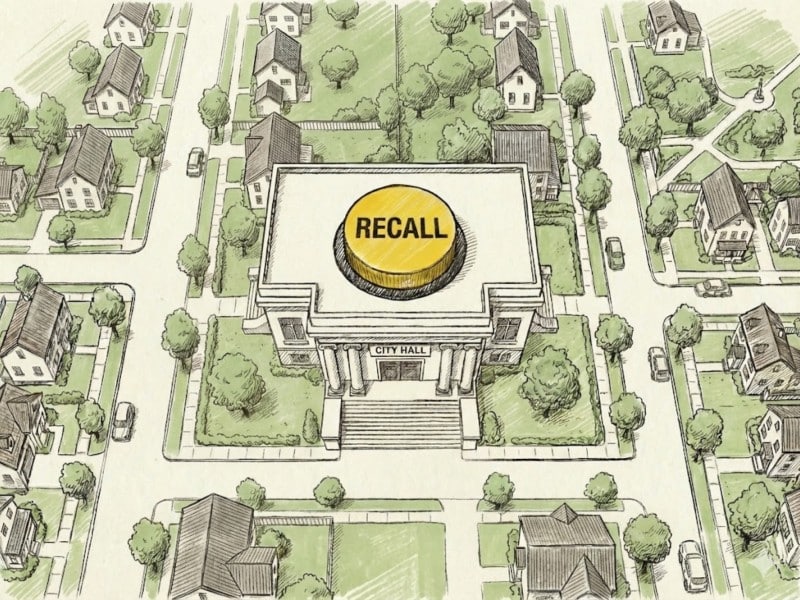
New Jersey voters have the power to remove elected officials from office by recalling them, according to the New Jersey Constitution. Recalls can happen to elected officials working in local, county, and state government. Federal elected officials cannot be recalled using state law, according to a 2010 New Jersey Supreme Court case.
A recall is a voter-led process where voters form a committee, collect signatures, and prompt an election to decide whether to remove an elected official from office.
The Jersey Bee produced this explainer to help New Jersey residents understand the steps required to initiate a recall, the requirements for signatures and petitions, and how the office is filled if a recall is successful.
When can voters recall an elected official?
An elected official must serve at least one year of their current term before they can be recalled.
But the recall process can start earlier. A recall committee can initiate the process up to 50 days before the incumbent’s first year in office is complete.
How do voters initiate a recall election?
A recall committee must be formed to start the process, according to state law. This committee requires at least three registered voters to submit a notice of intention to the recall election official for the office being recalled. The notice should include a request for a special election if the committee seeks one.
The recall election official varies depending on the office being recalled:
- Municipal government: Municipal Clerk
- Board of Education: Board Secretary
- County government: County Clerk
- State government: Secretary of State
The notice of intention initiates a process that the recall election official must follow, according to state law:
- Review: The election official has three business days to review the notice for compliance.
- Notification: The official must notify the elected official targeted by the recall within five business days.
- Publication: A public notice of the recall effort must be published by the election official within two weeks of approving the notice of intention.
After notice is filed, voters must collect a minimum number of signatures on a petition to put the recall to a vote.
How many signatures does a recall petition need?
A recall petition involves gathering signatures from registered voters in the jurisdiction where the elected official is being recalled.
To force a recall vote, the petition must be signed by at least 25% of the registered voters in the jurisdiction based on the last general election. Recall organizers should confirm the minimum requirements with election officials.
The state sets time limits for gathering signatures depending on the office:
- Governor: Organizers have 320 days to collect signatures.
- Other elected officials: Organizers have 160 days to collect signatures.
Election officials have 10 business days to verify signatures once submitted. The municipal or county clerk or Secretary of State will certify the results of the petition and schedule a recall election if there are enough qualifying signatures.
When do recall elections happen?
The recall election can be scheduled at least 60 days after the petition results are certified.
A recall election may be scheduled for the next general election, or the recall committee may request a special election be held sooner.
What happens during a recall election?
The ballot used on recall election day asks a Yes or No question, or a referendum, according to state law:
“Shall (name of elected official being recalled) be recalled from the office of (title of office)?”
Voters may see arguments for and against removal in their sample ballots, including:
- Reasons for the recall prepared by the recall committee.
- A rebuttal answer provided by the elected official being recalled.
If a replacement must be chosen during the recall election, the ballot will also include the names of nominees to complete the recalled official’s term.
What happens after an elected official is recalled from office?
If the majority of voters choose “Yes,” the official is removed, and the seat is declared vacant. The method for filling that vacancy depends on the office:
- Governor: The Lieutenant Governor becomes governor for the remainder of the term.
- State Senate or Assembly: The vacancy is filled temporarily by a replacement selected by the political party of the recalled legislator, followed by a special election.
- Interim Appointment: Within 35 days, the county committees representing the legislator’s party and district meet to select an interim successor to fill the seat.
- Special Election: This appointed successor serves until the next general election, at which point voters elect a candidate to serve the remainder of the unexpired term.
- Local and county elected officials: Voters select a successor during the recall election. The ballot will have a second section listing nominees to replace the official if the recall is successful.
- If elections are partisan: Political parties nominate candidates to run on the recall ballot.
- If elections are nonpartisan: Candidates must file a nominating petition to run on the recall ballot. These petitions need to meet signature requirements used for independent candidates in a general election.
Can a recalled official run to replace themselves?
The official being recalled is allowed to run as a candidate in the election to replace themselves.
Learn more
Read this information packet for recall and recall defense committees from the N.J. Department of State.
View a sample recall petition available from the state here.
Read Frequently Asked Questions on Recall Election Law from the New Jersey School Boards Association.
Help improve this resource
Help The Jersey Bee improve this resource by volunteering your expertise on the subject. Contact us here or email connect@jerseybee.org to share your experience.
Authors


Related Articles

How to deal with heat waves and hot weather in New Jersey
The average temperature in New Jersey is rising faster than most of the U.S. Here is what residents should know about heat waves and dealing with hot weather.
Meet the Democratic candidates running in NJ-11 special election primary
Learn about the candidates running in the Feb. 5 Democratic primary for the 11th congressional district special election in New Jersey.

How New Jersey fills congressional vacancies
Here is the process for filling vacancies in the U.S. Senate and House of Representatives in New Jersey.
