
Common political terms and what they mean in New Jersey
Politicians and media use terms to describe policies and politics in New Jersey that aren’t universally understood. Here are some common political terms and what they mean.

U.S. adults’ knowledge of government works varies by topic, but many report not knowing key facts about politics or how laws are made and enforced.
Political terms appear in news articles, election campaigns, and local laws. But they’re not always clearly defined, and some have unique meanings and histories in New Jersey.
The Jersey Bee produced this glossary to help residents and voters make sense of political language that shapes their lives and votes.
SHARE YOUR INPUT: What other political terms do you think we should define?
What is politics?
Politics involves actions and decisions made by government officials, lawmakers, and other people that influence policy.
Policies are laws or rules that shape how people live and how resources are distributed.
Politics can affect legal, social, and economic systems.
The public participates in governmental politics by:
- Signing nominating petitions.
- Voting for candidates during elections.
- Voting on ballot measures, also known as referendums.
- Joining advocacy groups.
LEARN MORE: How does municipal government work in Essex County and New Jersey
Politics is also practiced outside of elected government. Employers establish rules that govern workers’ lives by determining wages, benefits, working conditions, and what workers produce. Landlords set rules for tenants.
Unions, associations, and other organizations work to shift decision-making power away from individuals in authority and toward the people directly affected by those decisions.
What is a political spectrum?
A political spectrum is a way to categorize and compare different political parties, positions, and ideas. It often uses one or more lines to show where political ideas stand in relation to each other on social or economic issues.
Political scientists and economists disagree on how to show the political spectrum or if it’s the best way to explain politics. But it’s still widely used to describe people’s beliefs and political moments.
In the U.S., the most common version is a straight line with “left” and “right” sides.

Common political terms and what they mean
The Jersey Bee identified common political terms by reviewing Google search trends and news reporting in New Jersey.
Most political scientists agree that some terms are more difficult to define than others because of their changing meanings. That’s why The Jersey Bee compiled each definition from a variety of sources, including universities, dictionaries, encyclopedias, and news articles.
Political frameworks
Progressive
1. Political movement (historical)
Political and social reform movement in the U.S. from 1890 to 1920. It responded to wealth inequality and the political power of corporations brought on by the rise of factory work and major industries. It was guided by public demands to make the government responsive to people’s economic, social, and political needs. Ended at the start of World War I. Commonly referred to as “The Progressive Era.”
Promoted:
Workers’ rights.
Women’s right to vote.
Regulating large businesses.
Environmental protections.
Government services for low-income people.
Sources: Encyclopedia Britannica, Oxford Research Encyclopedias
2. Political movement (modern)
Social and political movement focused on addressing inequality through government programs and regulations and advancing legal rights for historically harmed communities.
Sources: Merriam-Webster, NPR, BBC
Left
1. Political category
A set of ideas advancing social and economic equity through systems that meet people’s fundamental needs and eliminate hierarchies.
Sources: Oxford Reference, Cambridge Dictionary
Right
1. Political category
A set of ideas that maintain or accelerate existing social and economic hierarchies.
Sources: Oxford Reference, Cambridge Dictionary, Encyclopedia Britannica
Political roles
Political party boss
1. Role
An elected official, political party leader, or major donor who uses their influence through jobs, campaign funds, and endorsements to maintain power within a political party.
In New Jersey, local political party bosses historically influenced election outcomes through candidate endorsements. Party-backed candidates received primary placement on most New Jersey election ballots, known as “the county line,” which shaped electoral outcomes to favor party insiders.
In March 2025, Gov. Phil Murphy signed a law to redesign the state’s primary election ballots by grouping candidate names under the title of the office they seek, known as an “office-block” design.
Sources: The American Prospect, Rutgers University, Merriam-Webster
Political systems
Authoritarianism
1. Form of government
Political power is concentrated in a single leader or a small group who enforces obedience to authority while restricting opposition and civil liberties among people. This individual or group makes decisions that are not responsive to the people they serve or are legally meant to represent.
Sources: Democracy Toolkit, Merriam-Webster, Encyclopedia Britannica
2. Cultural custom
Authoritarian attitudes grow from prejudice or bias against others, an expectation to obey authority, and a low tolerance for opposition. It can result in voter suppression, government censorship of media, and arrests and violence against activists and protesters.
Source: University of Cambridge, Stanford University
Democracy
1. Form of government
A political system in which power is granted to all people and decisions are made by majority rule.
“Democracy” was historically used to describe power exercised through votes made during gatherings and referendums. Those decisions inform laws and policies.
In modern use, “democracy” is broadened to include what is known as a “republic,” where people elect legislative representatives to make government decisions.
Sources: University of Cambridge, Merriam-Webster
2. Cultural custom
A democracy is meant to be representative of its constituents.
Democracies include:
Public feedback on policies.
Equal opportunity to vote.
Equal access to information.
Voter control of policies.
Sources: Encyclopedia Britannica, Stanford University
Oligarchy
Political and economic power is concentrated within a small group, usually composed of ultrawealthy or otherwise influential people. This group has disproportionate control over the government and uses its resources in its own interests.
Sources: Merriam-Webster, Democracy Toolkit
2. Cultural custom
Commonly unelected, ultrawealthy people who persuade the public and political officials that they fill an important role in government. This group of people influences policy and bypasses democratic processes.
Sources: Baylor University, Encyclopedia Britannica
Election rules and institutions
New Jersey Election Law Enforcement Commission
1. State government agency
Oversees campaign fundraising and spending in New Jersey elections.
According to state law, candidates must file reports showing how much money they’ve raised and spent, including donations from individuals, businesses, unions, and other groups.
Under New Jersey’s 2023 Elections Transparency Act, the commission is responsible for approving increases to campaign contribution limits every two or four years, depending on the office they seek.
In November 2024, NJ ELEC increased gubernatorial donation limits to $5,800, up from $4,900 in 2020.
Candidates can qualify for matching public funds if they raise at least $580,000. That also means they become eligible to participate in the state-sponsored candidate forums.
Eligible candidates who receive matching public funds must agree to a spending limit of $8.7 million during the 2025 primary and $18.5 million during the 2025 general election. They also must agree to participate in two candidate debates.
Find candidate expenditure and contribution reports online here.
Sources: NJ Election Law Enforcement Commission, New Jersey Monitor
Learn more
Find more definitions of political terms at the resources listed:
- BBC News US election glossary: A-Z guide to political jargon
- Outlier Media’s Election Glossary: Understand common terms
- New Jersey Election Law Enforcement Commission Glossary
Help us improve this resource
Help The Jersey Bee improve this resource by volunteering your expertise on the subject. Contact us here or email connect@jerseybee.org to learn about ways to help us explain this subject to our community.
Author

Related Articles
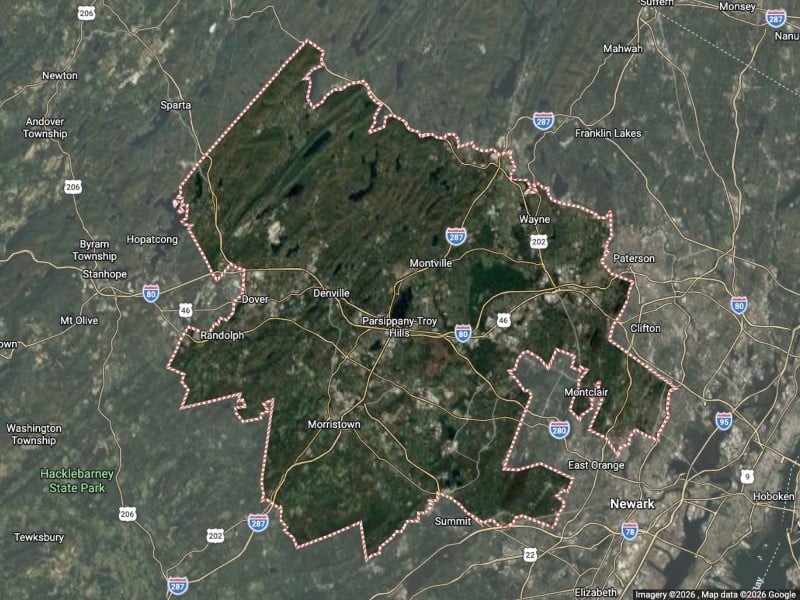
Meet the Democratic candidates running in NJ-11 special election primary
Learn about the candidates running in the Feb. 5 Democratic primary for the 11th congressional district special election in New Jersey.
How New Jersey fills congressional vacancies
Here is the process for filling vacancies in the U.S. Senate and House of Representatives in New Jersey.
How to recall elected officials in New Jersey
Learn about the rules, timelines, and requirements for removing elected officials from office before their terms ends in New Jersey.
