
It shouldn’t take luck to know what’s happening where you live
The Jersey Bee is launching The Jersey Bee 2030, a plan to deliver local news for working people to every corner of New Jersey by 2030.

The Jersey Bee 2030 is The Jersey Bee’s plan to become the largest, independent local news provider in New Jersey. Read more about our nonprofit local news service below and reach us at connect@jerseybee.org if you or someone you know may be interested in making a major donation or grant to support The Jersey Bee’s service and expansion.
Much of what The Jersey Bee does today started in a parking lot. When we launched in 2020, I spent nearly every Friday of the pandemic’s first 18 months handing out food from the back of a food pantry van at an elementary school. Families scheduled their whole weeks around those distributions, waiting in line every Friday afternoon, rain or shine.
Then, one Friday in late December, the van didn’t come. The pantry couldn’t make it that week – and a dozen families who had planned not just their time but their meals around two bags of groceries went home cold, wet, and hungry on New Year’s weekend. In Essex County, at least one in five households can’t reliably get enough food to eat every week.
What I learned that day is that our communities have no dedicated way to communicate – whether it’s about the week’s food delivery, where to get help with a utility bill, or news about the business opening down the street. There are no public pipes for the flow of civic news and information. The Jersey Bee exists to be exactly that: local public infrastructure for the people who need it most.
Civic information is a public good
The Jersey Bee believes access to civic information is a fundamental right – one that makes every other right accessible. So much of daily life begins with access to information: healthcare, education, housing, safety. But, too often, finding what you need comes down to who you know or what you stumble across.
It shouldn’t take luck to access resources in your community. The Jersey Bee is a civic news provider working to make sure it doesn’t.
New Jersey needs civic information infrastructure development. The state ranks last in the country in journalists per capita, and the systems people once relied on to make sense of local life – things like neighborhood bulletins, civic clubs, PTAs, unions – have shrunk just as the number of digital platforms demanding our attention has multiplied.
The result is a form of segregation: communities with the least access to information are disproportionately working people and communities of color. This impact is felt by an overwhelming majority of New Jerseyans: roughly two in three residents across the political spectrum say they want more local news about where they live.
The Jersey Bee began as the Bloomfield Info Project, a single pandemic newsletter for a town of 50,000. We built a way to gather, sort, improve, and deliver local information at a scale and quality few others could match – and we called it Harvest. In service, we learned that people’s lives don’t stop at the town line, so in 2023, we expanded across East Essex County. Today, we serve an area of more than 700,000 residents across a dozen towns and cities. We’ve been recognized locally, nationally, and internationally for work ranging from police investigations to youth training programs, most recently as a finalist for the Next Challenge for Media.
Two things make that possible – and set us apart. The first is Harvest, the patent-pending curation platform we developed in Bloomfield, which turns a firehose of online information into a structured local newswire we now use to serve 12 diverse towns and cities. The second is our practice, which we call Civic Information Design: a research-backed method for listening to what a community needs and answering with the right intervention – because not every problem is solved by a news article. Together they let us reach large, diverse local audiences with high-quality news at a fraction of the usual cost, and to stand up new newsletters or coverage areas with little resources.
That is what our 2030 plan builds on. Over the next four years, we’ll invest in our people and our technology to turn our seven-year-old startup into an institution – one that can weather hard times and keep serving the people we know will feel them first. We’ll grow our public service newsroom toward self-sustainability and deepen our service across more of the state, so that being informed about your New Jersey community isn’t a matter of luck, but a matter of daily life.
The Jersey Bee, by the numbers
- 700,000 residents in our service area
- 12 towns and cities covered daily
- 5,000 local news briefs a year
- 14 newsletters (13 daily and one statewide weekly)
- 15,000 monthly digital readers across platforms
- 3,200 newsletter subscribers
- 40% open rate
- 50% BIPOC
- 67% women
- 7 events in 2026
Three kinds of work, one civic mission
Everything we do falls into three kinds of work. Together, they allow us to inform and engage our community in order to prepare them to take action on the issues that matter to them.
Curate so people know what’s happening
- Harvest, our curation platform.
- 14 daily and weekly newsletters.
- A community events calendar.
- A virtual help desk.
Report and explain so people understand what matters and why
- Original and investigative reporting.
- Explainers and how-to guides.
- Info hubs on key topics.
- Maps, timelines, and Q&As.
Convene and equip to prepare people to act together
- Community events and forums.
- Training and workshops.
- Listening sessions and surveys.
- Coalition and partner referrals.
A tested model
The practices we started developing in the early months of the pandemic have since become an essential methodology at The Jersey Bee. When we saw gaps in food access, we didn’t write an article. Instead, we asked people what they needed, gathered information or resources to help, and delivered it to them. We did it by distributing 2,000 handmade masks, launching text message services, and delivering information on food pantries and other resources.
We do the same with local news today. Behind our words is a rigorous, research-backed practice – civic information design – that runs through five steps. We observe, diagnose, prescribe, intervene, and evaluate in a process adapted from the clinical method doctors use to diagnose and make treatment plans and the human-centered design frameworks used by tech companies to design and build systems. Our process rests on the only peer-reviewed standard for judging whether local news actually meets a community’s needs.
It’s also how we make sure we’re covering what matters: the framework ensures we can meet all eight critical information needs identified for the Federal Communications Commission, including emergencies and risks, health and welfare, education, transportation, economic opportunity, the environment and recreation, civic information, and political information.
What success looks like
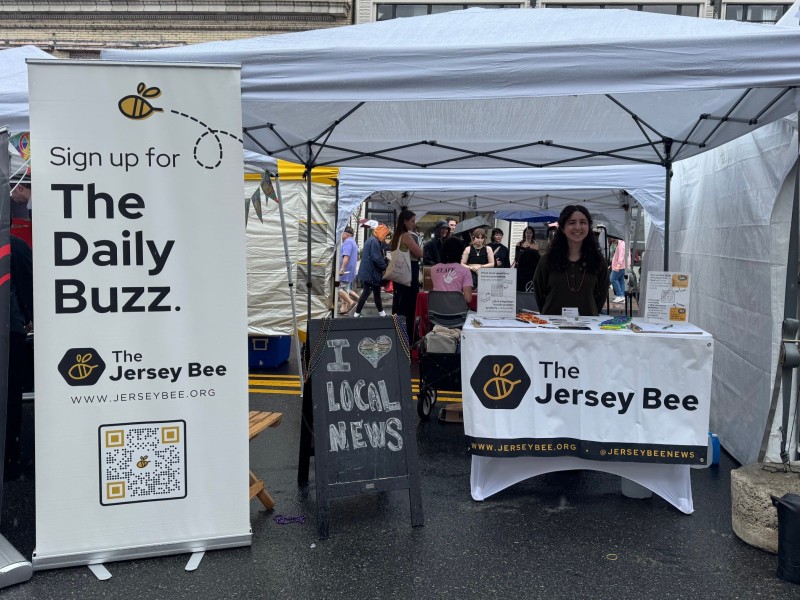
Our readers are the working people of New Jersey. Half are people of color. Two-thirds are women. They are equal parts young people, adults, and seniors. And many struggle to raise families, contribute to their communities, or just get by while making ends meet. We know them because we meet them: at street fairs, in listening sessions, through text messages, and over neighborhood fences.
One of them is Alex, a father of two, who wrote to us not long ago:
“I ran into you at a street fair…and I’ve been reading your daily local news emails since. It is not an exaggeration to say you’ve changed the course of my family’s life…
We [joined a neighborhood group] that has become our little community and has made all the difference to our happiness and well-being in these deeply troubling times.
It all started with one event, I suggested my wife attend because I read about it in one of your emails. Being aware of what’s happening locally has done so much to pull our family out of the isolation of contemporary life…Your work is a rare source of hope.”— Alex, subscriber
What I appreciate most about Alex’s note is how it shows the quiet power of The Jersey Bee’s model. For Alex, his kids, and the millions of New Jerseyans who the mainstream media has left behind – we know that one sentence in one email can change what’s possible where you live.
Join us in the future
Over the next four years, we’ll invest in the people and technology to become the largest independent local news provider in New Jersey. We’ll grow our public service newsroom toward self-sustainability, launch services for new communities, on different topics, and for non-English-speaking readers, deepening our commitment to serving New Jersey’s working people and communities of color.
We’re also exploring how the same curation technology that powers our newsroom could serve institutions like hospitals, universities, and major employers that need trustworthy, structured local information at scale.
New Jerseyans don’t have to wait for a better future. We have the opportunity to build a better future today by changing the news and resources we have access to. To do that, The Jersey Bee commits to providing the information you need to survive, thrive, and build power in the Garden State.
And we ask you to join us. As a newsletter subscriber, social media follower, or, most importantly, as a monthly supporting member.
Thank you for your ongoing support. I’ll see you in the future.
Author

Related Articles
Why we’re calling Delaney Hall a “concentration camp”
The term describes facilities where targeted groups are held without due process under inhumane conditions.

Statement on the ICE killing of Renee Good
As we look to Minneapolis and every people and place facing systemic violence – we must not forget that New Jersey is one of those places, too.
We’re hiring a Development Associate
The Jersey Bee is looking for someone with experience in fundraising, development, marketing, or communications to work with us as a part-time Development Associate for four months beginning February 2026.
