
From the intern’s desk: Lessons on rebuilding trust in media from my Civic Reporting Internship at The Jersey Bee
At The Jersey Bee, journalism isn’t just about reporting. It’s about filling information gaps through listening, inclusive design, and equipping people to become changemakers in their communities.

Public trust in the media has reached a historic low. According to a 2024 Gallup study, confidence in mass media has ranked lowest among 10 major civic and political institutions in the United States. Just 1 in 3 respondents expressed a “great deal” or “fair amount” of trust in media, including television, radio, and newspapers to report “fully, accurately and fairly.”
Declines in trust mirror declines in newsroom employment. According to Pew Research, newsroom employment has declined by at least a quarter since 2008. And since 2005, 3,200 print newspapers have shut down, an average of over two per week.
As a result, more people are living in news deserts where they lack access to reliable local news and information. Data from 2024 revealed that nearly 55 million residents in the U.S. live in a community that has limited to no access to a trusted news source.
In response, local journalism organizations like The Jersey Bee are emerging or expanding to bridge this growing gap. As a recent graduate of The College of New Jersey, The Jersey Bee’s focus on addressing civic information needs, increasing civic participation, and improving diverse populations’ quality of life aligns with my values and makes me eager to make measurable differences in the local communities that surround me.
So far, I’ve learned that mass media has historically sensationalized the news, using exaggerated headlines, out-of-context information, eye-catching photos, and a focus on highly scandalous or violent events to increase engagement, prioritizing the organization’s financial gains over accuracy. Vulnerable communities are often exploited in the process, without receiving any actual help.
This traditional model differs from a growing solutions-focused journalism practice, which aims to address needs and fill information gaps, so everyone has consistent access to quality, factual, and useful local news and information.
Solutions-focused journalism also aims to build trust with the communities they serve, especially among underrepresented groups whose perception of media may be negative. For example, immigrants have been the targets of fraudulent scams exploiting housing and financial insecurity. Rightfully, it can be hard for these communities to trust that media institutions have their best interest at heart.
Fair reporting is just one piece of the puzzle toward restoring public trust in the media. Design is also an essential component. As a former student reporter and editor, I had a narrow view of design, considering it a visual component related to page layout, graphics, and font. Being in a real-world newsroom has expanded my perspective.
Design in journalism relates to accessibility and inclusivity, ensuring that all communities have access to vital information. Innovation can be centered on human needs, and technology is simply one of the tools used to bring it to life.
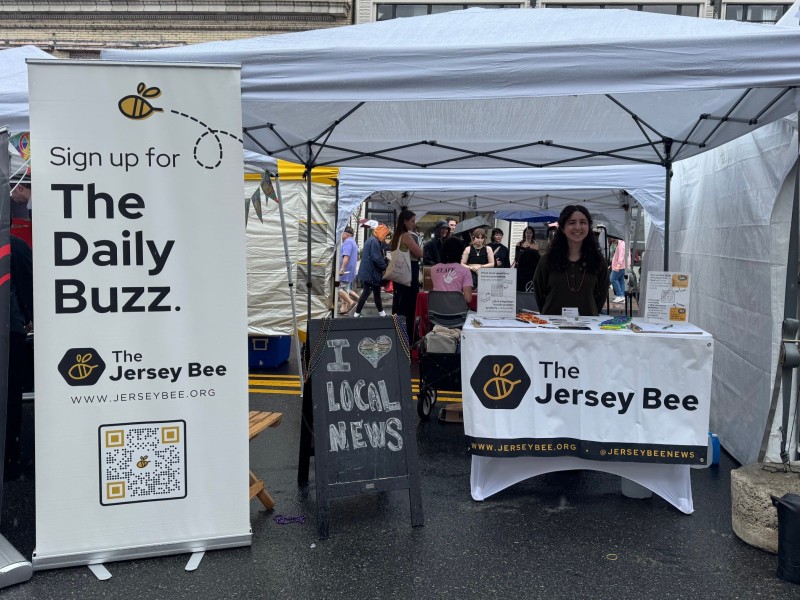
Design can be achieved through website design components, such as alternative text on web pages or listening to what readers need by giving them an outlet to submit questions, tips, or events. Design also incorporates how in-person events are organized, from tabling to speakers to the content presented. These components work interdependently to deliver value to attendees.
Civic participation begins with access to these types of intentionally designed experiences because it helps people get engaged and equipped to participate in their communities.
In journalism, engagement builds relationships with people. Positive outcomes can include social media likes, event attendance, newsletter sign-ups, and new donors. But equipping takes this concept a step further by empowering people to act in their own communities and become changemakers.
That’s why The Jersey Bee’s Civic Media Corps recruits, trains, and pays residents to produce media that meets information needs by documenting public meetings, canvassing, interviewing, and other roles. It’s a redistribution of power from institutions to the people.
This sort of democratic participation is essential for encouraging people to vote on matters that affect them, hold institutions accountable, and use their voices to drive meaningful change. That’s why it’s equally important for journalists and media organizations to strengthen relationships with their communities to ensure that people feel safe enough to voice their concerns and empowered to engage in civic life.
Author

Related Articles

Statement on the ICE killing of Renee Good
As we look to Minneapolis and every people and place facing systemic violence – we must not forget that New Jersey is one of those places, too.
We’re hiring a Development Associate
The Jersey Bee is looking for someone with experience in fundraising, development, marketing, or communications to work with us as a part-time Development Associate for four months beginning February 2026.

Next steps (and responses to your questions) after our 34th District forum cancellation
Join The Jersey Bee as a supporter, fan, or event co-host to help us build and strengthen our community in repsonse to political interference.
