
How noncitizens can protect themselves when talking to ICE officers in New Jersey
What you say (or don’t say) to U.S. Immigration and Customs Enforcement officers could protect you and your family if ICE is at your home or workplace.

This article was originally published by Documented, an independent, non-profit newsroom dedicated to reporting with and for immigrant communities in New York City. It’s republished here with New Jersey-specific information as part of a collaboration between Documented and The Jersey Bee. The original article can be accessed here.
Immigrants and undocumented migrants have rights when interacting with U.S. Immigration and Customs Enforcement (ICE). Understanding these rights is essential to protecting yourself and your family. This guide explains what ICE is, how its agents operate, and how you should respond during encounters.
What is ICE?
ICE is a federal agency under the U.S. Department of Homeland Security (DHS) tasked with enforcing immigration laws, investigating illegal activities, and protecting national security. ICE is responsible for enforcing immigration policies, including the detention, deportation, and removal of people in the U.S. without legal status.
With an annual budget of about $8 billion and 20,000 employees, the agency has two main divisions: Enforcement and Removal Operations (ERO), which handles deportations, and Homeland Security Investigations (HSI), which focuses on criminal activities such as human trafficking, immigration fraud, and drug smuggling.
What to do if ICE comes to your house
If ICE agents come to your door, it’s crucial to understand your rights and handle the situation safely. According to the American Civil Liberties Union, the first thing to do is to remain calm and avoid panic. If agents are at your door, keep the door closed and ask through it whether they are immigration agents from ICE. This helps you control the situation without immediately letting them inside.
Once you’ve established who is at the door, ask them the purpose of their visit. It is generally safer to speak to ICE agents through the door rather than opening it right away. If the agents do not speak your language, ask for an interpreter to assist with communication. This ensures that you fully understand what is happening.
LEARN MORE: How ICE agents may impersonate local law enforcement and lie to make arrests
One of your key rights is asserted when you verify whether the agents have a judicial warrant. You can ask them to provide a warrant signed by a judge, and if they claim to have one, request that they slide it under the door for inspection.
Carefully examine the warrant they provide. A judicial warrant, which must be issued and signed by a judge, will specifically list a person’s name and/or areas to be searched within your home. An administrative warrant issued by the Department of Homeland Security (DHS) or ICE, signed by an immigration officer, does not have the authority to grant entry into your home. If ICE agents do not present a judicial warrant, you are legally within your rights to refuse them entry. In this case, it is important to state clearly, “I do not consent to your entry.”
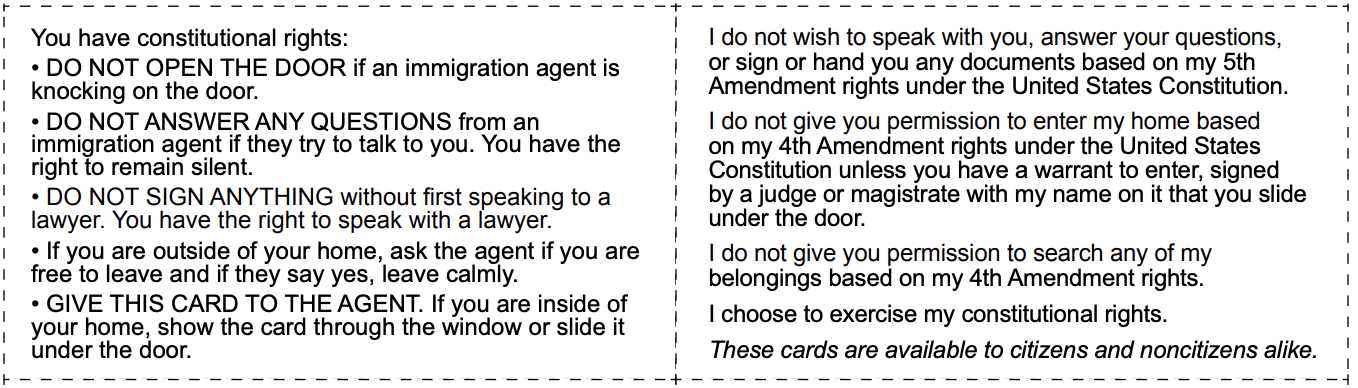
If the agents attempt to force their way inside, do not physically resist. Clearly state, “I do not consent to your entry or search of these premises. I am exercising my right to remain silent and would like to speak with a lawyer.”
Everyone inside the residence has the right to remain silent, so exercise this right. It’s also essential to not sign any documents or provide false information. Before signing anything, consult a lawyer to ensure you fully understand your rights and the legal implications of any paperwork. By knowing and asserting your rights, you can protect yourself and your family during an encounter with ICE.
What to do if ICE comes to your workplace
If you encounter ICE agents at your workplace, it’s important to understand your rights and stay calm.
According to the Center for Human Rights and Constitutional Law, employees have the right to remain silent and not answer questions about their immigration status. Workers also have the right to legal counsel, meaning you can wait to consult an attorney if you are approached by ICE.
If ICE agents seek access to private areas of a workplace, you have the right to request a warrant signed by a judge, and they must show it before entering restricted spaces.
During an ICE raid, workers should remain composed and avoid obstructing or resisting agents, as this could lead to legal consequences. It’s recommended to designate a point person to communicate with ICE and document any relevant details, such as the names and badge numbers of agents. Inform your attorney about the raid as soon as possible, and avoid providing false information or fraudulent documents. Additionally, employees should be familiar with their employer’s policies on handling ICE encounters to ensure the safety and rights of everyone involved.
Non-citizens are required to have proof of their immigration status with them at all times. This could be an Employment Authorization Document (EAD), green card, USCIS approval notice granting them status, or print-out of their I-94 Arrival Document. They should also keep copies on their phone or paper copies in a safe place. They should not carry their foreign passport or birth certificate with them.
You can download a Know Your Rights card from the Immigrant Defense Project. The card provides essential information about legal rights when interacting with U.S. Immigration and Customs Enforcement (ICE) and is available in multiple languages, including Simplified and Traditional Mandarin, Haitian Creole, French, and Spanish.
What to do if ICE detains you
Your family or friends can find out where you are being held through ICE’s Online Detainee Locator System, available here.
To use this system, they will need your full name and your Alien Registration Number (A number), which is usually listed on immigration documents.
LEARN MORE: How to use ICE’s detainee locator system
Additionally, they can contact the local ICE office or call ICE’s Detention and Reporting Information Line at 1-888-351-4024 to request information about your location.
Requesting bond for release
In many cases, individuals detained by ICE have the right to ask for bond, which is a sum of money paid to the government as a guarantee that you will attend future court hearings. You can request that ICE set a bond amount, and if the amount is too high or ICE refuses to set one, you have the right to request a bond hearing before an immigration judge. During this hearing, the judge will assess whether you pose a danger to others or are likely to appear for your court dates.
To improve your chances of securing a bond, it is helpful to provide evidence of your ties to the community, such as pay stubs, a signed lease, or support letters from family members, friends, clergy, or employers. Keep in mind that if you recently arrived at the border or have certain criminal convictions, you may not be eligible for bond. You must consult an immigration lawyer to better understand your eligibility.
LEARN MORE: Immigration legal services available in New Jersey
If the bond amount is set higher than you or your family can afford, you may be able to get assistance from a bond fund. The National Bail Fund Network offers a directory of community bail funds that might be able to help. First Friends of New Jersey and New York is a local nonprofit organization providing bond assistance and relief.
Find local immigration resources in New Jersey
- New Jersey Consortium for Immigrant Children is a legal services and advocacy organization that has resources on navigating immigration court, education and school enrollments, and the rights of English language learners.
- ACLU New Jersey and New Jersey Alliance for Immigrant Justice are state advocacy organizations that share resources on immigrant rights and protections.
- Immigrant Advocates Network is a resource network that shares a list of free or low-cost immigration legal service providers and lawyers by state or county.
Help us improve this resource
Do you know something about this topic we should consider adding to this article? Contact us here.
Authors


Related Articles

Expungement clinic planned Mar. 26 in Newark
From Newark City.

Bloomfield residents can attend bicycle repair workshop Mar. 28
From Bloomfield Public Library.

Glen Ridge library to host virtual decluttering workshop Mar. 26
From Glen Ridge Public Library.
