
Newark residents build power to shape city’s redevelopment
Newark groups launch “development watch” to inform residents of property development in their neighborhoods and train them to help shape zoning and land use decisions.
This article is part of a partnership between The Jersey Bee and Next City exploring segregation in Essex County, New Jersey, and solutions to building a more just and equitable county and state.
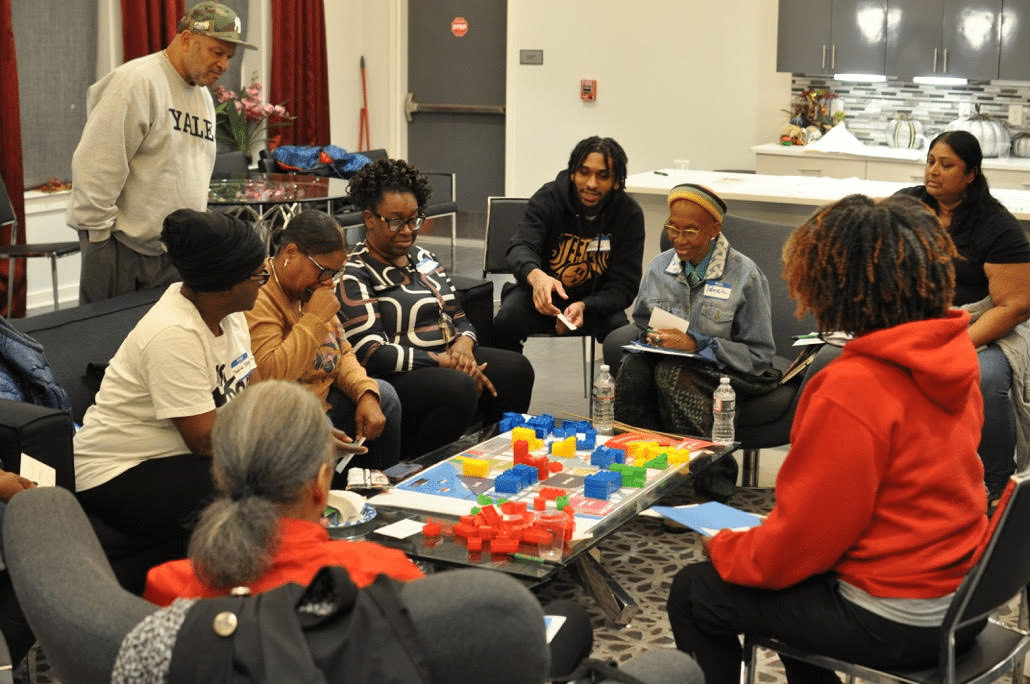
Asada Rashidi and several other Newark residents gathered around a 3D map of Newark. The plan was covered with legos and paper cutouts representing city streets, rivers and bays, family homes, and local community institutions like childcare centers and churches.
But then Rashidi and her team instructed the workshop participants to discuss what rules they would create to regulate development for the health and welfare of Newark’s residents. New zoning concepts and uses, like where residential, commercial, and industrial zones can go, transform how participants view the map.
Rashidi is a community organizer with Newarkers Organized for Accountable Development (NOFAD), a resource by the South Ward Environmental Alliance that trains Newark residents and organizations on how real estate development and land use works in their neighborhoods.
A lifelong Newark resident, Rashidi said she wants to make sure her neighbors know they have influence over what their homes look like.
“We don’t want to have a city where we don’t recognize it anymore,” said Rashidi.
In 2022, the city of Newark approved Newark360, a master plan that outlines the city’s development plans for the next decade. Kim Gaddy, executive director of the South Ward Environmental Alliance, said the zoning changes that followed Newark360 ignored residents’ concerns about the lack of environmental justice and housing protections, like increasing flooding risks and converting residential blocks to commercial zones.
More than 280 people signed a petition in October 2023 that said the changes would bring “much weaker and riskier rules for how we build our city.” Newark’s city council approved the new zoning laws a month later.
“When it comes to zoning, we know it is all about the details, and unfortunately, in this case, the devil is in these changes,” said Gaddy.
Gaddy says that the lack of inclusive dialogue to create the future of Newark was the inspiration behind NOFAD, a collaborative effort between nonprofits South Ward Environmental Alliance, Clinton Hill Community Action, and urban design group HECTOR.
“Communities have to be able to speak for themselves,” she said. Her organization focuses on environmental justice issues facing Newark’s South Ward – home to one of the world’s largest metal recycling centers, Newark International Airport, and the Port of Newark (where approximately 20,000 trucks come in and out daily).
In 2024, NOFAD is training a cohort of fifty community members to understand who approves land use proposals, how public hearings work, and how they can monitor property development in their community through a “development watch.”
Land use shaped by segregation
Gaddy says that to understand how a community is built, you have to look at its history.
“Zoning laws are, from its inception, racist,” she explains.
In city planner M. Nolan Gray’s book, “Arbitrary Lines: How Zoning Broke the American City and How to Fix It,” Gray describes how “combined with other planning initiatives, zoning largely succeeded in preserving segregation where it existed and instituting segregation where it didn’t.” As Black Americans migrated from the South to the Northeast in the early-mid 1900s, cities were quick to adapt exclusionary zoning codes to preserve segregation.
While some activists call for eliminating zoning regulations, NOFAD organizers instead work to reconnect zoning and land use debates to a renewed practice of democracy that remedies historic inequities in zoning.
In “Segregation By Design,” political scientist Jessica Trounstine explained how white homeowners in towns like Cherry Hill advocated for zoning that maintained exclusivity on schools, prohibiting building low- and moderate-income housing in her book.
Glen Ridge, N.J., a suburb near Newark, was one of the first municipalities to implement zoning rules in New Jersey. In 2022, only 2% of Glen Ridge’s residents were Black, while Black residents of neighboring municipalities made up as much as 79% of the population.
READ: Apartheid by Another Name: How Zoning Regulations Perpetuate Segregation
These zoning ordinances were rolled out alongside policies and practices that disinvested in Newark’s affordable housing supply and public infrastructure.
In the 1930s, the federal government’s exclusionary process known as “redlining” drew red lines around large sections of Newark and surrounding areas, describing them as “slum” neighborhoods that were “useful only to those in [the] lowest income brackets” because they were majority Black residents.
Tens of thousands of white residents started leaving Newark in the 1950s as a result of government disinvestment in cities, a shift known as “white flight.” This departure drastically changed the city’s demographics from a majority white population to majority Black.
By the 1960s, the city’s central planning board rolled out its “urban renewal” plan with support from the state and federal government, demolishing homes and historic buildings to make space for interstate highways, contemporary buildings, universities, and hospitals. 77% of residents displaced from the plan in Newark were Black, according to Newark Changing, a research project by Newark Public Library.
Nicole Miller, a sustainability consultant and Newark resident, said that those constructed highways didn’t help everyone. In fact, it segregated communities further, limiting their access to economic and natural resources.
“We do have people who are disconnected from their waterways [due to highways],” she said.
“We have McCarter Highway, which absolutely separates the population of Newark from the Passaic River, rightfully… because it’s so very polluted,” Miller added that only in the last decade did Newark focus on cleaning up its waterfront parks.
A fourth-generation Newarker and a mother of three children with asthma, Gaddy of the South Ward Environmental Alliance says that people’s lived experiences are proof of the city’s racist land use policies.
“We know why people are dying in our community,” she said. “We could talk about an aunt, an uncle who died of cancer, had kidney issues, who have asthma.”
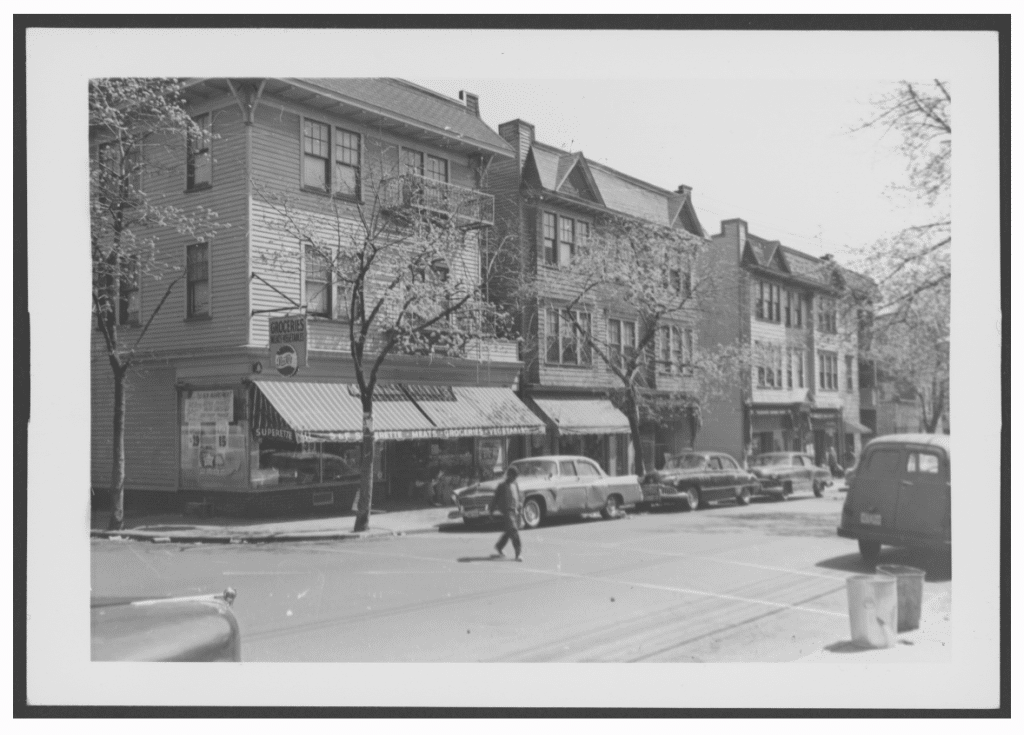
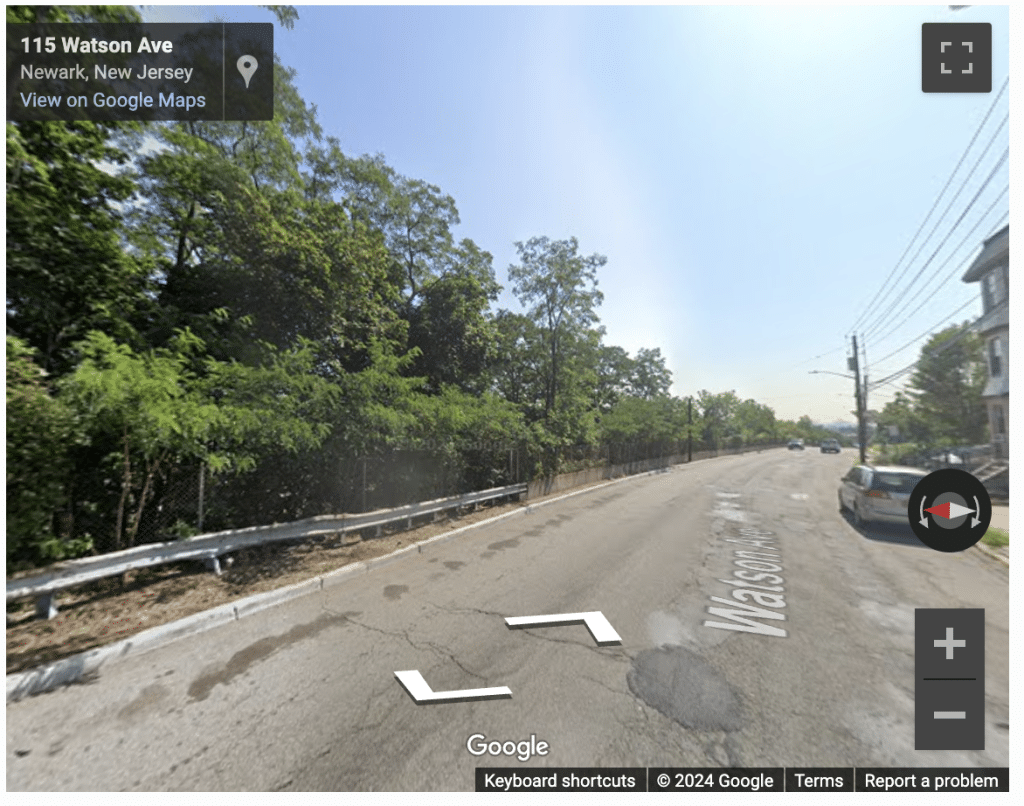
Today, Newark is home to four toxic waste sites designated Superfund sites by the U.S. Environmental Protection Agency. One of those sites, Diamond Alkali chemical plant, sits less than a mile from a riverfront park and remains too toxic to excavate due to Agent Orange chemicals manufactured at the plant in the 1960s.
Miller said that the city has neglected residents’ needs for decades in favor of industry and corporate interests.
“The health and wellness of the region economically are being prioritized over the health and wellness of the people who live in the city,” she said.
READ: How Essex County falls short on food access
Early wins, neighborhood impact
Essential to the NOFAD model is replicating a “development watch” throughout Newark. Created by the Clinton Hill Community Action, development watch is a resource that compiles upcoming development proposals submitted to planning boards and notifies local residents and block organizations on what could be built in the city’s Clinton Hill neighborhood.
“We try to get the residents to understand that you have a voice and you have influence… because you live here,” said Nii Abladey Otu, housing and real estate development manager at Clinton Hill Community Action. “[These decisions are] going to affect you more than any of the zoning board officials.”
In March 2023, Otu and his team organized their neighbors after learning that a developer wanted to build a 30-bed halfway home just two doors down from a corner liquor store in the Clinton Hill neighborhood. The organization trained residents on what the proposal meant for them and how to prepare a public comment. More than 130 people showed up to the virtual zoning board meeting to share their concerns, ultimately leading to the board to reject the developer’s application.
Otu says that their organization wants to work with developers so that residents’ interests are reflected in zoning plans.
“We’re not against development. We want accountable development,” he said.
At a workshop in October 2024, Damon Rich, an urban designer and partner at HECTOR, and the NOFAD team used toy blocks and a felt chart to teach residents about the ABCs of development – applications, boards, and commissions. Participants discussed how to apply this knowledge to work towards accountable development in their neighborhood, like effectively negotiating with developers and publicizing proposed developments.
“NOFAD is something that touches every aspect of life,” said Rich. “It affects the places you live, places you work, where you study, what you see when you walk around your neighborhood, but it also really plugs in the power of shared imagination.”
While still in its early stages, South Ward Environmental Alliance’s Gaddy shared that NOFAD participants across Newark’s wards have already started integrating these teachings into their planning. One local developer swapped out plans for gas stoves in a residential building for electric stoves after residents shared concerns about health and environmental risks, according to Gaddy.

This fall’s cohort is the biggest yet. Gaddy and her team made a few changes to the program since it ran for the first time last year, zooming in on who the key players are in land use decisions and how to prepare for upcoming meetings.
Gaddy said she hopes training residents through the NOFAD program will allow communities to stay one step ahead of developers.
“We don’t always want to be reacting to what’s happening in our communities. We can have a proactive approach to offset the worst kind of development by ensuring residents have a seat at the table and meaningful participation in the process,” she said.
“Nothing about us, without us, is for us.”
Learn More
Learn more about Newarkers Organized for Accountable Development (NOFAD). If you’re interested in bringing the Development Watch to your neighborhood, reach out to Clinton Hill Community Action.
Are you a Newark resident interested in learning what can be built in your neighborhood? Check out the City of Newark’s zoning map.
Authors


Related Articles
Meet the Democratic candidates running in NJ-11 special election primary
Learn about the candidates running in the Feb. 5 Democratic primary for the 11th congressional district special election in New Jersey.

How New Jersey fills congressional vacancies
Here is the process for filling vacancies in the U.S. Senate and House of Representatives in New Jersey.
How to recall elected officials in New Jersey
Learn about the rules, timelines, and requirements for removing elected officials from office before their terms ends in New Jersey.
